Influencer Marketing vs Traditional Advertising: Which Is Better?
In today’s fast-paced digital era, the marketing landscape is changing almost every day. New platforms are emerging, audience behavior is constantly shifting, and competition between brands is reaching new heights. This means businesses now have more options than ever — but also more challenges. Traditional marketing has been one of the most trusted approaches for decades, with TV, radio, print, and billboards playing a strong role in building mass awareness. Even today, these channels continue to prove powerful for large-scale exposure.
On the other hand, influencer marketing has seen explosive growth in recent years. On platforms like Instagram, YouTube, TikTok, and Snapchat, creators influence audiences through relatable and authentic content, giving brands a personal and human touch. Both approaches have their own strengths and limitations, so the right choice depends on your brand’s goals, target audience, and budget. Let’s take a closer look at how they compare.

What is Influencer Marketing ?
Influencer marketing is a modern digital strategy where brands partner with Instagram creators, YouTubers, bloggers, TikTokers, and niche experts to promote products in a natural and relatable way. People trust influencers because they follow them for their personality, content, and lifestyle — which makes their recommendations feel genuinely impactful and more convincing than traditional ads.
Strengths of Influencer Marketing
1. High Trust & Credibility
Influencers build strong personal bonds with their audience, so their recommendations feel honest and relatable. This trust directly boosts brand credibility and influences purchase decisions more effectively than traditional ads.
2. Highly Accurate Targeting
Brands can choose creators whose followers match their exact niche, ensuring content reaches people genuinely interested in similar products. This makes campaigns more meaningful, relevant, and impactful for specific consumer groups.
3. Authentic & Relatable Content
Influencers present products through real-life storytelling, making promotions feel natural instead of overly scripted. Their casual style helps audiences connect emotionally with the brand and understand product value more clearly.
4. Strong Engagement Levels
Influencer posts often get high engagement through likes, comments, shares, and DMs because followers enjoy interacting with their favorite creators. This real-time engagement boosts visibility and strengthens brand-to-consumer connection.
5. Flexible Budget Options
Brands can collaborate with nano, micro, mid-tier, or celebrity creators based on budget and campaign goals. This flexibility makes influencer marketing accessible for startups, small businesses, and large brands alike.
Weakness of Influencer Marketing
1. High Fees for Top Influencers
Well-known influencers charge premium rates due to their huge reach and influence. This can make collaborations expensive for smaller brands and limit long-term partnerships with top-tier creators.
2. Performance Variation
Results differ because each influencer’s audience behaves differently. Some creators generate strong engagement, while others may underperform, making outcomes unpredictable across different campaigns.
3. Authenticity Issues
If Influencers promote too many brands or irrelevant products, their recommendations start feeling forced. This reduces audience trust and negatively affects how people perceive the promoted brand.
4. Market Saturation
With thousands of influencers posting brand deals daily, the space feels crowded. To stand out, brands must create unique concepts and choose creators who maintain quality and originality in their content.
What Is Traditional Marketing?
Traditional marketing refers to all the offline promotional activities and advertising methods that brands have relied on for decades to reach, influence, and inform the public long before the rise of digital and social media platforms. These include:
-
TV commercials
-
Radio ads
-
Newspaper & magazine ads
-
Billboards
-
Posters & brochures
-
On-ground events
These offline channels continue to play a significant role in creating mass awareness and building long-term brand credibility.

Strengths of Traditional Marketing
1. Broad Reach
Traditional media like TV, radio, and print have the ability to reach millions of people simultaneously. This makes them ideal for national-level campaigns where brands aim to spread awareness across a wide audience.
2. Strong Physical Presence
Billboards, posters, and printed ads create a lasting impression because people see them repeatedly in their daily environment. This repetition naturally increases brand recall and strengthens visibility.
3. Familiar & Trustworthy
Because traditional media has been around for years, many consumers naturally trust it. A TV or newspaper ad often feels more legitimate and well-established, which helps brands build authority — especially among audiences who aren’t very active online.
Weakness of Traditional Marketing
1. Limited Targeting
The biggest limitation is the lack of accurate targeting. A billboard or newspaper ad reaches everyone in that area — but only a small fraction may actually be interested in the product. This reduces efficiency for specific or niche audiences.
2. No Direct Interaction
Unlike digital platforms, traditional advertising doesn’t allow people to react, comment, or communicate with the brand right away. This absence of two-way interaction slows down feedback and customer engagement.
3. High Cost
Producing a high-quality TV commercial or renting billboard space can cost a huge amount of money. For small businesses or new brands, this investment often isn’t practical, making traditional marketing harder to adopt.
4. Hard-to-Measure ROI
Traditional media cannot offer in-depth analytics. Brands don’t get exact numbers for how many people viewed the ad or took action. As a result, measuring ROI becomes more guess-based than data-driven.
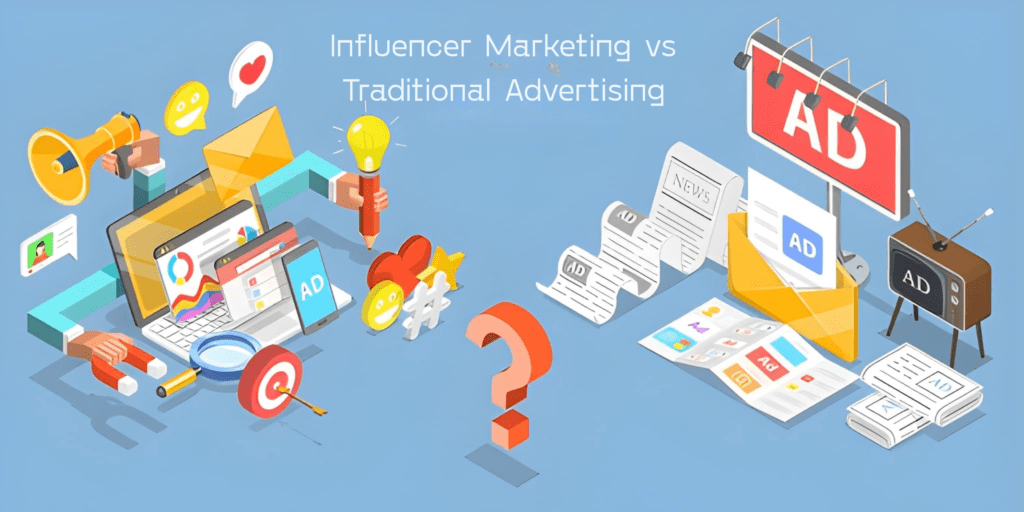
Traditional Marketing vs Influencer Marketing — Quick Comparison
| Category | Traditional Marketing | Influencer Marketing |
|---|---|---|
| Reach | Broad, mass audience | Niche-focused |
| Cost | High | Flexible |
| Targeting | Limited | Highly precise |
| Trust Level | Moderate | High |
| Engagement | Low | Strong & interactive |
| ROI Tracking | Hard | Very detailed |
| Speed | Slow | Fast |
| Content Style | Formal | Relatable & natural |
Which Strategy Is Best for Your Brand?
1. Based on Audience
-
If your audience is active on Instagram, YouTube, TikTok, or Snapchat → influencer marketing wins.
-
If your audience consumes TV, newspapers, or radio → traditional marketing works better.
2. Based on Budget
-
Smaller or flexible budget → influencer marketing (especially micro/nano creators).
-
Large-scale national branding → traditional channels like TV or outdoor ads.
3. Based on Brand Identity
-
Modern, youth-focused, lifestyle brands → influencer storytelling performs better.
-
Corporate, luxury, or formal brands → traditional ads build authority.
4. Based on Performance Tracking
-
Need detailed analytics, real-time tracking, and exact ROI → influencer marketing.
-
Need mass awareness → traditional marketing.
5. Based on Execution Speed
-
Influencer campaigns → fast, flexible, easy to execute.
-
Traditional campaigns → slow, structured, and require production time.
Final Thought
Influencer marketing clearly gives brands an edge in today’s digital-first world — higher trust, better engagement, precise targeting, faster execution, and measurable results. Traditional advertising still matters for mass visibility and long-term brand recall, making it useful for large-scale campaigns.
The most effective strategy is to combine both. Traditional channels create broad awareness, while influencer marketing transforms that awareness into genuine interaction, engagement, and conversions, giving your brand maximum impact across both online and offline platforms.