Artificial Intelligence (AI) in Influencer Marketing: Benefits, Tools & Best Practices
Influencer marketing has become one of the most effective ways for brands to reach their target audience. However, managing influencer campaigns manually can be time-consuming and challenging. Finding the right creators, analyzing audience quality, tracking campaign performance, and measuring ROI often require significant time and effort.
This is where Artificial Intelligence (AI) is transforming influencer marketing. AI helps brands and agencies make smarter, data-driven decisions by simplifying campaign planning, influencer discovery, audience analysis, and performance tracking. Instead of relying on guesswork, businesses can use AI-powered insights to create more effective influencer marketing strategies.
In this guide, you’ll learn what AI in influencer marketing is, why brands use it, how it works, its key benefits, the best AI tools, best practices, and the future of AI in influencer marketing.
What is AI in Influencer Marketing?
Artificial Intelligence (AI) in influencer marketing refers to the use of AI-powered technology to improve and automate different stages of influencer campaigns. Instead of relying on manual research, AI analyzes large amounts of social media data to help brands make faster, smarter, and more accurate marketing decisions.
By using AI, businesses can identify suitable influencers, understand audience behavior, optimize campaign strategies, and measure campaign performance more efficiently. This enables brands to save time, reduce manual effort, and make data-driven decisions throughout the influencer marketing process.
How Does AI Work in Influencer Marketing?
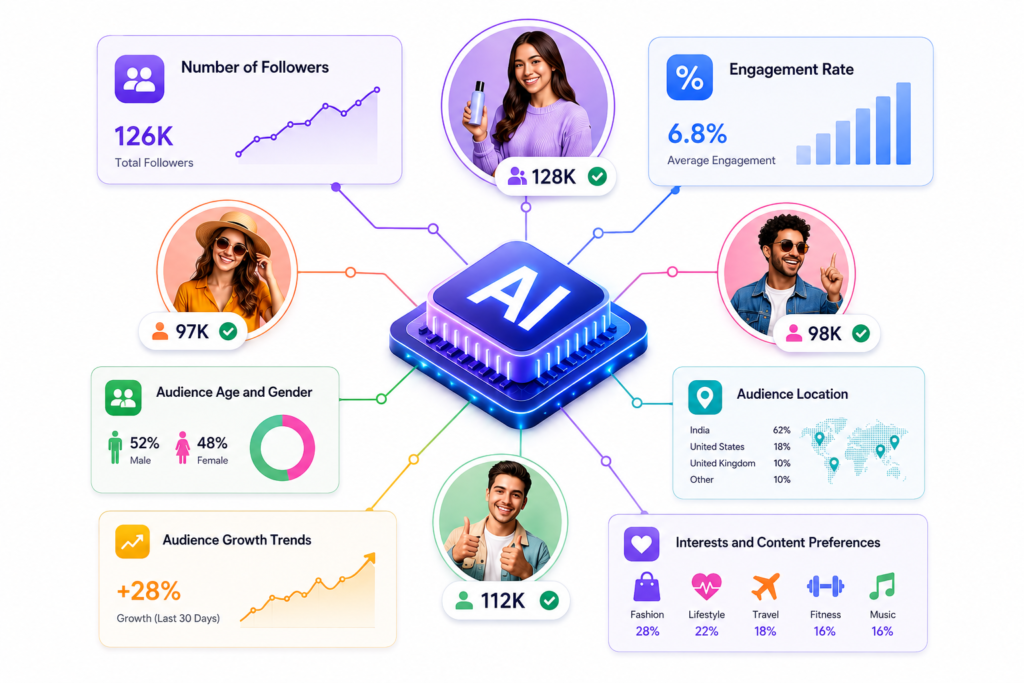
AI collects and analyzes data from multiple social media platforms to understand how influencers and their audiences perform.
It evaluates factors such as:
- Number of followers
- Engagement rate
- Audience age and gender
- Audience location
- Interests and content preferences
- Content quality
- Posting frequency
- Audience growth trends
- Previous brand collaborations
- Historical campaign performance
After processing this information, AI recommends influencers who closely match a brand’s target audience and campaign objectives. Many AI platforms also continue monitoring campaigns after they go live, helping marketers optimize performance in real time.
How AI is Used in Influencer Marketing
Artificial Intelligence (AI) is transforming every stage of influencer marketing. From finding the right creators to tracking campaign performance, AI helps brands make faster, smarter, and more data-driven decisions.
1. Finding the Right Influencers
Finding the right influencer is one of the most important parts of any influencer marketing campaign. Instead of selecting creators based only on follower count, AI analyzes multiple factors such as audience quality, engagement rate, content niche, audience interests, and brand relevance.
For example, if a skincare brand wants to target women aged 18–30 in Delhi, AI can quickly identify influencers whose audience matches these requirements. This helps brands collaborate with creators who are more likely to deliver better campaign results.
2. Understanding the Audience
Knowing an influencer’s audience is just as important as choosing the influencer. AI provides detailed audience insights, including age, gender, location, interests, language, and the times when followers are most active. These insights help brands reach the right audience, improve campaign targeting, and increase the chances of better engagement and conversions.
3. Detecting Fake Followers
Not every influencer has a genuine audience. Some accounts use fake followers or artificial engagement to appear more popular.
AI can detect: fake followers, spam comments, unusual engagement patterns, sudden follower growth, and other suspicious activities. This allows brands to work with authentic creators and avoid wasting their marketing budget.
4. Predicting Campaign Results
One of the biggest advantages of AI is its ability to predict campaign performance before the campaign begins.
By analyzing historical data and influencer performance, AI can estimate expected reach, engagement, views, clicks, conversions, and return on investment (ROI). These predictions help brands choose the right creators and make more informed marketing decisions.
5. AI Helps Create Better Content Strategies
Creating engaging content consistently can be challenging for both brands and creators. AI helps simplify the planning process by suggesting reel ideas, captions, video scripts, content hooks, hashtags, and trending topics.
These insights help creators produce more engaging content while saving time and improving overall campaign planning.
6. Automating Campaign Tasks
Managing influencer campaigns involves many repetitive tasks that can take a lot of time. AI automates activities such as influencer discovery, outreach, campaign tracking, deliverable management, performance monitoring, and report generation.
By handling these routine tasks, AI allows marketing teams to focus on strategy, creativity, and building stronger relationships with creators.
7. Measuring Campaign Performance
Once a campaign is live, AI continuously tracks its performance and provides real-time insights. It automatically generates reports that include key metrics such as reach, impressions, engagement, website traffic, conversions, sales, and ROI.
These reports help brands understand what worked, compare influencer performance, and improve future influencer marketing campaigns.
Best AI Tools for Influencer Marketing
Different AI platforms offer different features depending on your campaign needs.
| AI Tool | Best For |
|---|---|
| Modash | Influencer discovery and audience analysis |
| HypeAuditor | Fake follower detection and influencer analytics |
| CreatorIQ | Enterprise influencer campaign management |
| GRIN | E-commerce and creator relationship management |
| Upfluence | AI-powered influencer discovery and outreach |
| Aspire | Brand-creator collaboration management |
| Traackr | Global influencer campaign tracking |
| Influencity | Audience insights and campaign reporting |
| Brandwatch Influence | Social intelligence and influencer research |
| Favikon | Creator discovery and personal brand analysis |
Choose a platform based on your business size, campaign goals, and budget.
Best Practices for Using AI in Influencer Marketing
To get the best results from AI, brands should combine technology with human expertise instead of relying entirely on automation.
Define Clear Campaign Goals
Before using any AI tool, identify what you want to achieve. Whether your goal is brand awareness, engagement, website traffic, lead generation, or sales, clear objectives help AI recommend the most suitable influencers.
Choose Influencers Based on Audience Quality
A creator with fewer but highly engaged followers often delivers better results than someone with a large but inactive audience. Focus on audience relevance rather than follower count.
Verify AI Recommendations
AI speeds up influencer discovery, but marketers should still review content quality, communication style, brand fit, and previous collaborations before making a final decision.
Monitor Campaign Performance Regularly
Track important metrics such as reach, engagement, clicks, conversions, and ROI throughout the campaign. Real-time monitoring helps identify opportunities for optimization.
Build Long-Term Creator Relationships
The best influencer marketing campaigns are built on trust and consistency. Instead of one-time collaborations, invest in long-term partnerships with creators who genuinely align with your brand.
Combine AI with Human Creativity
Use AI for research, analytics, and automation, but let your marketing team handle campaign strategy, storytelling, and relationship management. The combination of AI and human creativity produces the strongest results.
The Future of AI in Influencer Marketing
Artificial Intelligence is expected to play an even bigger role in influencer marketing over the next few years. As AI technology continues to evolve, brands will gain access to smarter insights, better audience analysis, and more advanced campaign automation.
Future AI-powered influencer marketing platforms may offer features such as:
- More accurate influencer recommendations
- Better fraud detection
- Predictive campaign planning
- AI-generated campaign briefs
- Real-time content optimization
- Advanced ROI forecasting
- Personalized creator-brand matching
However, authenticity will remain the foundation of successful influencer marketing. Brands that combine AI-powered insights with genuine creator partnerships will be better positioned to build trust, increase engagement, and achieve long-term business growth.
Final Thoughts
Artificial Intelligence is reshaping influencer marketing by making campaigns faster, smarter, and more data-driven. From discovering the right influencers and analyzing audience insights to detecting fake followers and measuring campaign performance, AI helps brands make informed decisions while saving valuable time and resources.
However, AI should be viewed as a powerful assistant rather than a replacement for human expertise. While AI excels at data analysis and automation, creativity, storytelling, and relationship-building still require a human touch.
Whether you’re a startup, a growing D2C brand, or an influencer marketing agency, using AI strategically can help you improve campaign performance, optimize your marketing budget, and build stronger partnerships with creators. As AI continues to evolve, businesses that embrace both technology and authentic collaboration will stay ahead in the competitive world of influencer marketing.
Frequently Asked Questions (FAQs)
What is AI in Influencer Marketing?
AI in Influencer Marketing means using Artificial Intelligence to make influencer marketing campaigns smarter and more effective. It helps brands find the right influencers, understand their audience, detect fake followers, and measure campaign performance. This saves time and helps brands make better marketing decisions.
How does AI work in Influencer Marketing?
AI analyzes social media data such as follower count, engagement rate, audience demographics, content quality, and performance. Based on this information, it recommends the best influencers for a campaign and helps brands improve their marketing results.
What are the benefits of AI in Influencer Marketing?
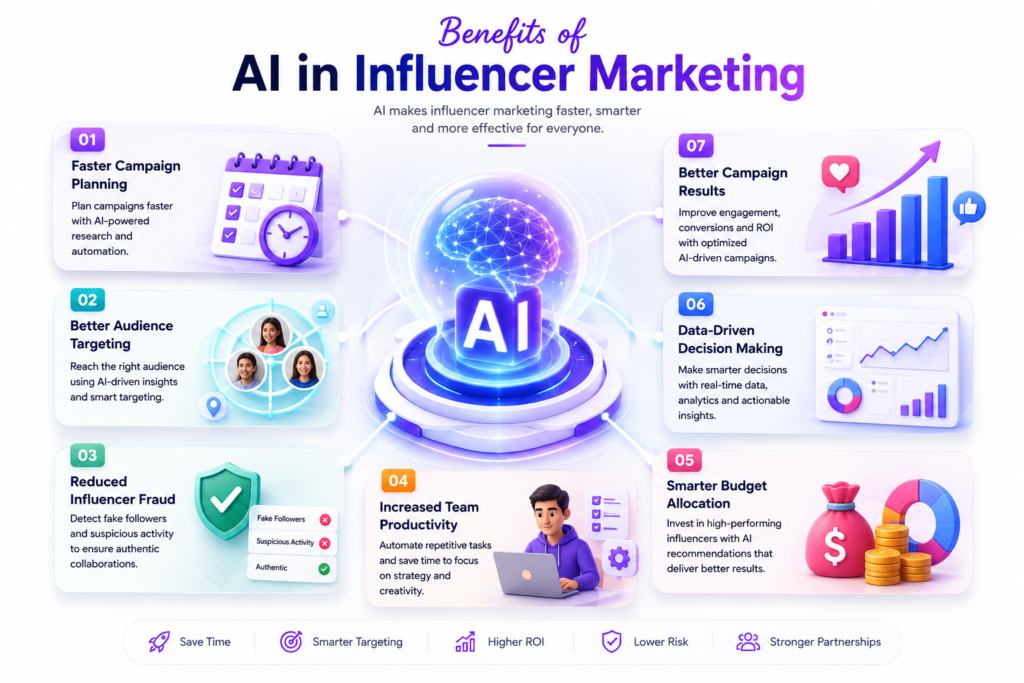
AI offers many benefits for brands, agencies, and creators. It helps find the right influencers faster, improves audience targeting, detects fake followers, automates repetitive tasks, saves time, reduces marketing costs, and improves campaign performance and ROI.
Which AI tools are popular for Influencer Marketing?
Some of the most popular AI influencer marketing tools include CreatorIQ, Upfluence, Aspire, Modash, HypeAuditor, GRIN, Influencity, and Traackr. These tools help with influencer discovery, audience analysis, campaign management, and performance tracking.
What are the best AI tools for Influencer Marketing in 2026?
Some of the best AI tools for influencer marketing in 2026 are:
- Modash
- Favikon
- HypeAuditor
- Brandwatch Influence
- CreatorIQ
- Upfluence
- Aspire
- GRIN
- Traackr
- Influencity
These AI tools help brands discover the right influencers, analyze audiences, manage campaigns, detect fake followers, and track campaign performance.